A browser editor, an AI rough-cut tool, and a measured experiment in generated 3D shots.
OmniCut and AI Edit
Active · 2026
A browser video editor, and a tool that rough-cuts my raw Minecraft recordings.
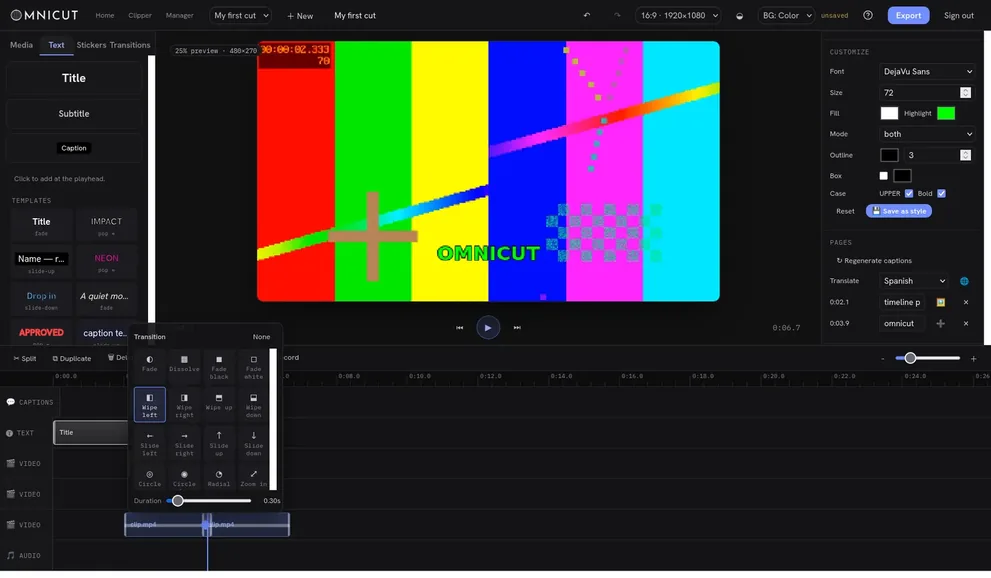
OmniCut is a multi-track editor in the browser: trim, split, filters, speed, fades, 20 transition types and auto-captions, exported by server-side ffmpeg or as an FCP7 XML and SRT bundle for Premiere and Resolve. The timeline model is a pure module with its own unit tests. One production crash set a rule for the whole server: Express 4 does not forward a rejected async handler, so a single bug had been taking the process down, and every async route is now wrapped.
AI Edit turns a raw OBS recording of my own Minecraft sessions into a rough cut, a preview render and a Shotcut project for touch-ups. Speech is found with voice detection and the transcript, because block sounds are as loud as my voice. The model scores sentences from 1 to 5 and the code fits the story to a target length; it never writes ffmpeg or MLT itself. Cuts are reviewed against norms measured from 89 published building videos, collected by mcstudy, which keeps measurements and deletes the footage.
- OmniCut: 293 unit tests and 48 end-to-end browser checks Aug 2026
- AI Edit: 690 tests Oct 2026
- A 51.5-minute recording became 6 cut variants; three review passes merged 96 problems into one list Oct 2026
- mcstudy indexed 3,287 videos from 745 creators without keeping any footage Oct 2026
Built with Node.js, Express, ffmpeg, JavaScript, Python, Flask, Whisper (Groq), DeepSeek, MLT
Blender explainer spike
Stopped · 2026
Can an LLM write Blender scenes good enough for explainer shots? Measured answer: not yet.
A one-week experiment in letting DeepSeek write Blender scenes for short 3D explainer shots, rendered headless with EEVEE on an integrated GPU and scored by a three-lens judge panel. Usable shots: 1 of 5 in the free-form round, 1 of 7 with an asset library, and 1 of 7 with assets plus a built environment. I stopped the line there.
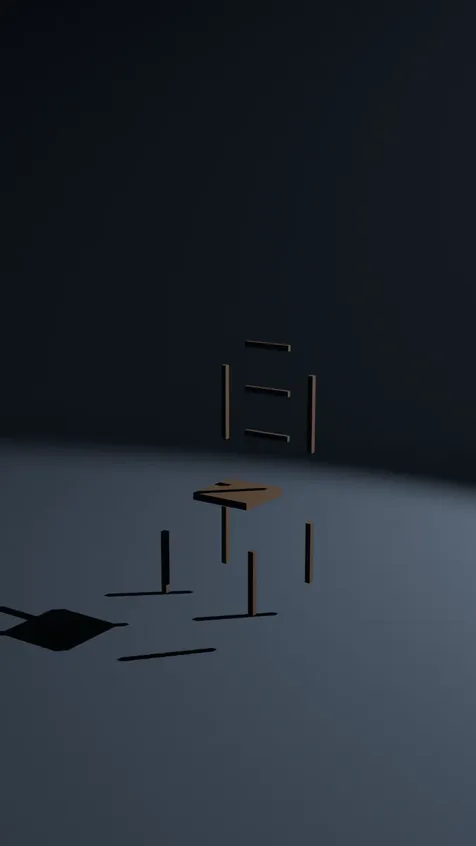
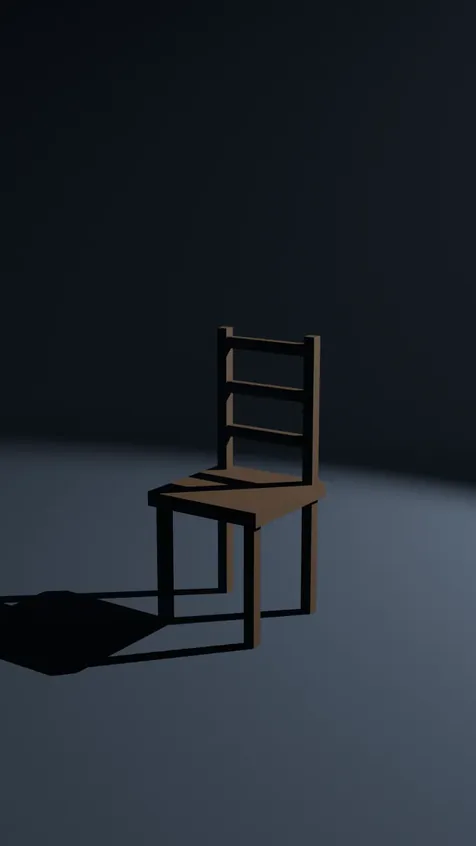
The failures taught more than the one success. An exploded chair turned out to be a unit error, not a reasoning failure: the model added cubes with size=1 but positioned them as if they were Blender's default two-unit cube, and the same script with size=2 renders a correct chair. A helper toolkit fixed placement: zero API errors and zero floating objects across seven scripts.
Rendering cost 3.75 seconds a frame for a lit 1080 by 1920 scene, so a 60-second Short takes about two hours. The write-up also logs its own mistakes, like benchmarks run on an accidentally black frame and my score of 4 of 7 against the panel's 1 of 7.
- Usable shots by round: 1 of 5, 1 of 7, 1 of 7 Sep 2026
- 3.75 s per frame at 1080x1920: about 113 minutes per 60-second Short Sep 2026
- Zero floating objects across 7 generated scripts once the placement helper was in Sep 2026
Built with Blender 4.5, Python, EEVEE, DeepSeek, Kokoro TTS, ffmpeg